
Episode Summary
Renzi Stone, Founder, and CEO of Saxum discusses the essential questions to consider when selling a professional services firm, including the importance of knowing your why when developing a business exit strategy..
About the Guest
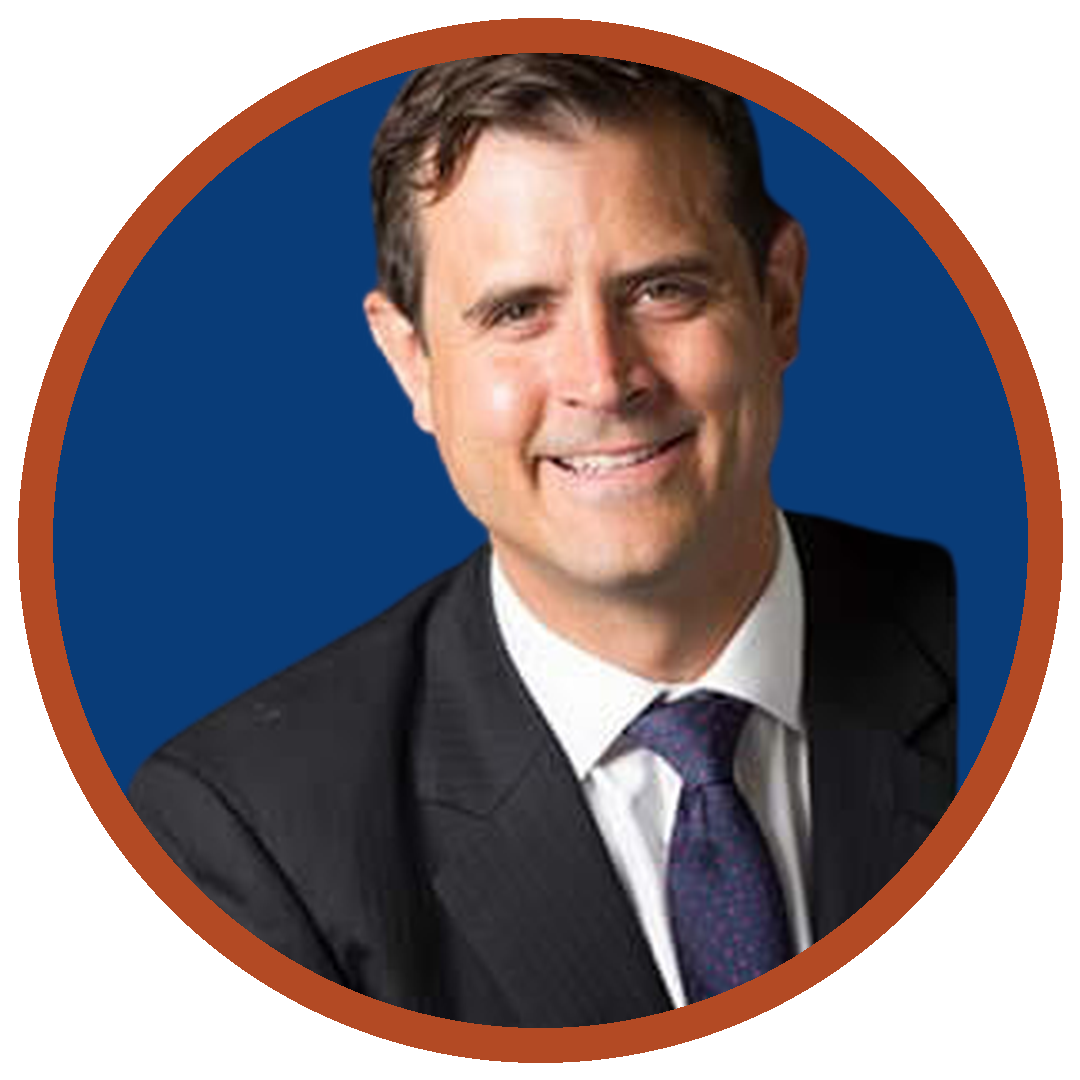
Renzi Stone
Renzi Stone is CEO and Founder of Saxum, an award-winning 50-person integrated digital marketing agency and consultancy headquartered in Oklahoma City, with a distributed workforce across the United States.
Key Takeaways
- Before entering any exit process, founders must answer one question: are you running a lifestyle firm or a scale firm? The answer determines everything about your exit strategy.
- If you’re a scale firm, you are required to build it to sell — that is the condition of the role, not an optional strategy.
- The reason to sell is deeply personal and must be examined honestly before engaging any buyer — if you’re unclear on your why, no deal outcome will satisfy you.
- A happy exit requires knowing who you are outside of the firm — founders whose identity is entirely wrapped up in the business are rarely happy on the other side of a transaction.
- Founders who begin thinking about their exit years before they intend to sell make far better decisions and achieve far better outcomes than those who decide suddenly.
Full Transcript
Sean Magennis [00:00:15] Welcome to the Boutique with Collective 54, a podcast for founders and leaders of boutique professional services firms. The goal of this show is to help you grow, scale, and exit your firm bigger and faster. I’m Sean Magennis, Collective 54 Advisory Board member, and your host.
In this episode, I will make the case that step number one in developing a business exit strategy and selling a professional services firm is knowing why you were selling before you sell. I’ll try to prove this theory by interviewing my friend Renzi Stone. Renzi is the Chief Executive Officer, and Founder of Saxum, an award-winning 50-person integrated digital marketing agency and consultancy headquartered in Oklahoma City with a distributed workforce across the United States. You can find Saxum at www.saxum.com. We’re going to learn a lot from Renzi. Renzi, great to be with you, and welcome.
Renzi Stone [00:01:24] Sean, excited to be with Capital 54 and Collective 54. And looking forward to talking about business exit strategies.
Sean Magennis [00:01:32] Fantastic Renzi. So let’s start with an overview. Can you briefly share with the audience an example of why knowing the reason to sell your professional services firm is so vitally important?
Renzi Stone [00:01:45] I think if you’re going to start off thinking about selling your firm, you really need to think first about why you’re in it, to begin with. Is there something else you have to offer your clients and your team members? And so it’s a good question. But I think the first thing that I would have to say is that every firm should make a critical decision. Am I in a lifestyle firm, or am I a scale firm?
And so, to answer that question for me, Sean, I would say I am in a scale firm. This means that I am required, as a condition of my employment as the CEO of this company, to be thinking about what the outcome over many years looks like. And the only way to have an outcome that is achievable on a scale firm is you have to build it to sell.
Sean Magennis [00:02:43] I love that. And that is so crystal clear the way that you distinguished that. And for the listeners’ sake, clearly articulating for yourself in a very deliberate way, whether you’re a lifestyle firm or a scale firm. Outstanding, Renzi, this is such a personal topic. I’m glad you’re here with me today because I know, you know, you’re a deep thinker. You have a strong set of core values.
So I’d like to get your thoughts on some important, you know, considerations and questions when thinking of selling your professional services firm. It’s a long list. I’ve only selected five things, and I know that you’ve probably got several more. But I’d like to get your thoughts on each.
So the first one is the reason to sell your boutique is very personal, and it should be. You’ve poured your life into building the firm; leaving it, handing it to somebody else takes much thought. How have you approached this?
Renzi Stone [00:03:40] Well, I think the thing that I think about about the decision to sell my firm, and it’s really important to note, Sean, I haven’t exited my firm.
Sean Magennis [00:03:51] Correct.
Renzi Stone [00:03:52] I aspire to have a firm that has enough value that an exit is possible.
Sean Magennis [00:04:00] Got it.
Renzi Stone [00:04:01] So to answer the question, the things that I’m thinking about as it relates to a business exit strategy are systems, talent, processes, and the why for me is: Have I brought the firm as far as it can go under my leadership? And when I think about our clients.
So one of the things I say all the time, Sean, is no clients, no Saxum – the only people that send money to Saxum. Unfortunately, our clients’ are the ones that send money to us, not vendors, not my friend, and certainly not my mom and dad. So if clients are the ones that send money to Saxum, my job as the Chief Executive Officer is how do I create more value for those clients? And if I create value, they’ll refer me to other people. They’ll increase their scopes of work.
And so the decision to sell for anybody is based on the idea of: Can you create more value for your clients by making that move? Any amount of money that I put in my pocket, any amount of lifestyle change that creates is only secondary to the first objective, which is how do you create more value for clients? And I think, Sean, I think if you get that backward , you are really at risk of having a failed acquisition, even if it gets closed. It may not perform.
Sean Magennis [00:05:29] I so appreciate you sharing that and that perspective because I agree with it 100 percent, and you touched on the money aspect. Some owners of boutiques sell exclusively for the money. And in your view, how important is the money aspect of selling?
Renzi Stone [00:05:49] Well, look, anybody who takes the risk, who puts capital and time at risk. And by the way, that’s in reverse order. Yes, time and capital at risk. Got it over 18 years. It’s 2021 right now. For 18 years, I have put my time and my capital at risk. Yes, I have put it at risk at the expense of doing other things with my time and my capital.
So money is absolutely a consideration for any boutique owner who’s thinking about selling. What I would argue is if all you can think about is the money, you’ve missed the whole point of creating something of value.
Sean Magennis [00:06:34] Well, well, well said. I’ve also heard that some owners sell because they’re bored. Some are exhausted. Some say that they that their work became a job. It’s not fun anymore. What are your thoughts on this aspect?
Renzi Stone [00:06:50] Well, I am also a believer that yesterday is gone and tomorrow has yet to come. And so we all have to live in the present. And if in the present we are not challenged, we don’t have vision. So the job of a CEO, Sean, as you know, is to have vision. You must have vision, and the vision must be compelling. It must be. It must be something that can be translated. It must be something that can be owned by others.
But if you fail to create a vision, you have failed to create something that is growing. And so I think to answer your question, people that leave boutiques because they’re tired or because they’re worn out, what they’re really saying is I don’t have a vision for the future. And so, the vision for the future is required. And I think anybody who continues to have a vision for the future should really ask themselves if it’s the right time to sell.
Sean Magennis [00:07:50] Beautifully said again. And you know, that’s a lot. There’s a lot of psychology and psychological challenge behind that, and I loved you saying live in the present. It’s challenging to do so, but that’s where the reward is. And I love your comment about vision. It has to be compelling, and it has to be lived 24-7. So many boutiques are partnerships. At times, partners start fighting. One needs to be bought out. You know there are complications with that. What are your thoughts on this?
Renzi Stone [00:08:22] Well, you’re talking to somebody who doesn’t have partners. And so….
Sean Magennis [00:08:25] For a reason, I presume.
Renzi Stone [00:08:28] Well, I had a partner at the very outset of the business, and I did all the work, and the partner received all the benefit. And so I said, “Hey, partner, either you buy me, or I buy you.” And the partner said to me, “Well, I don’t want to own it because I don’t want to run it.” And I said, “Well, I don’t want to run it because I’m working for you 50 percent of the time.” And so it caused quite a conflict, as you might imagine.
And so we resolved the situation. I bought his shares for a premium price, and then I own the rest of the business, so I own 100 percent of the business today. I would say for any professional services firm owner who is at odds with the value creation with their partner, I would say that today is the best day to resolve it.
And if you don’t resolve it today, then tomorrow, and if not tomorrow, then the day after. I’ll tell you this, what most people do, Sean, is they don’t resolve it correctly. They just allow it to fester, which creates resentment which creates unequal value creation. And it’s a disaster waiting to happen.
And we hear this in Collective 54 all the time. And it’s complicated, and it’s distracting to fight with a partner. But I would argue I addressed my problem. It was a problem. And as a result, I’ve created millions of dollars of value outside of that partnership, and it would not have been a good deal for me if I had stayed in that relationship.
Sean Magennis [00:10:06] Wow, that is practical. It’s vulnerable, and it’s real. Thank you, Renzi. That’s outstanding. Another reason to sell is that some professional services firm owners are afraid, and you’ve touched on this a little bit, that tomorrow might not be as profitable as today. So what do you think about that?
Renzi Stone [00:10:26] So I have a series of advice that I present to our team annually. There are 28 of them, but number one, Sean, is do not be afraid. Do not be afraid. And my counsel for anybody who thinks tomorrow might not be as good as today is, we have no idea. We just don’t know. And I’ll tell you; I have to tell myself the reasons. Number one on my list is because I have to tell it to myself regularly.
Sean Magennis [00:11:02] Yeah, that’s that’s excellent. So, um, I’ve met owners who’ve had happy exits, and I’ve met owners who have had unhappy exits. And you know, what’s the difference? Those who had happy exits knew why they were selling. Those who had unhappy exits did not.
Related Episodes
Ready to Scale, Sell, or Exit Your Firm?
Join Collective 54 — the only peer community built exclusively for founders of boutique professional service firms.
Apply for Membership